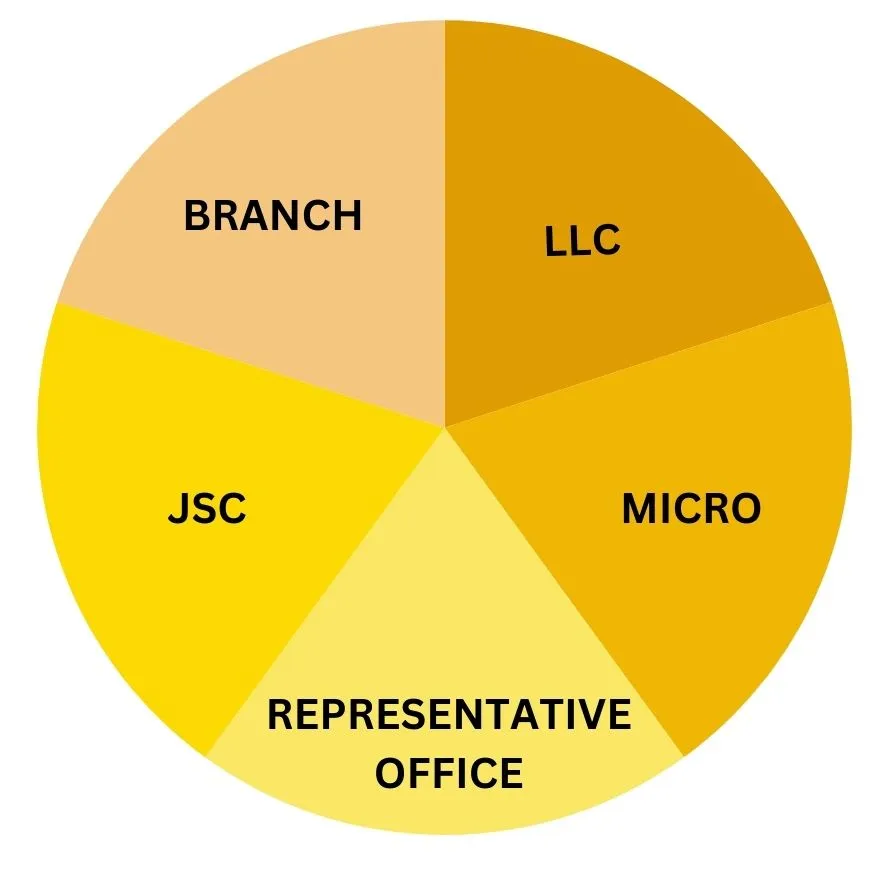
Companies are subject to a national corporate income tax. Other taxes relevant to companies include VAT and the contribution to social insurance social contributions, excise duties, customs duties and local taxes.
The currency is the new Romanian leu (RON), but tax laws indicate many limits in euros (EUR), in which case the exchange rate to be used is stipulated by law on a case-by-case basis.
1. Corporation tax
The standard corporate income tax rate is 16% for Romanian companies and foreign companies operating through a permanent establishment (PE) in Romania.
Taxpayers who carry out activities in the nature of night bars, nightclubs, discos or casinos and in whose case the corporation tax due for the activities provided for in this Article is less than 5% of the relevant income, they are obliged to pay tax at a rate of 5% applied to that recorded income. Companies that, in the previous year, recorded a turnover of more than EUR 50,000,000 and that, in the year of calculation, determine a Corporate income tax, cumulative from the beginning of the fiscal year up to the end of the period.
At the end of the tax year, those whose corporate income tax, calculated according to a calculation algorithm, is lower than the minimum turnover tax are required to pay corporate income tax at the level of the minimum turnover tax.
Credit institutions that are Romanian legal entities, and the branches in Romania of credit institutions that are foreign legal entities, are additionally liable, alongside corporation tax, to a specific tax on turnover, calculated by applying the following tax rates to turnover:
a) 4% for the period from 1 January 2026 to 31 December 2026 inclusive;
(b) 2%, for the period 1 July 2025–31 December 2026 inclusive, by way of derogation from point (a), for credit institutions that are Romanian legal persons and for the Romanian branches of credit institutions that are foreign legal persons, which hold a market share of less than 0.2% of the total net assets of Romania’s banking sector, calculated as the arithmetic mean of the market shares of the credit institution/branch in the year preceding the year of calculation. Market share represents the percentage attributable to the assets of the credit institution/branch in the total assets of the banking sector and is calculated as the ratio between the total net accounting assets of the credit institution/branch and the total aggregated net accounting assets for the banking sector, including the branches in Romania of foreign legal-entity credit institutions.
Romanian legal entities or foreign legal entities which, whether individually or in any form of association, supply goods, provide services in Romania or supply goods from the territory of Romania, and which carry on activities in the oil and natural gas sectors, shall, in addition to corporate profit tax, be liable to a specific turnover tax.
2. Micro-enterprise income tax
The threshold for qualifying as a micro-enterprise is EUR 100,000 starting from 2026.
As of 2023, this tax is optional.
For the purposes of this Title, a micro-enterprise is a Romanian legal entity which, as at 31, cumulatively meets the following conditions.
a) generated income that did not exceed the equivalent in RON of €100,000. The exchange rate used to determine the euro equivalent is the one applicable at the close of the financial year in which the revenues were recorded;
b) its share capital is held by persons other than the State and the administrative-territorial units;
c) is not in dissolution, followed by liquidation, recorded with the Trade Register or with the courts, in accordance with the law.
d) has partners/shareholders who hold, directly or indirectly, more than 25% of the value/number of participating interests or of the voting rights and is the only legal entity designated by the partners/shareholders to apply the provisions of this Title;
e) has submitted the annual financial statements within the prescribed time limit, if it is required to do so by law.
The tax rate on micro-enterprises’ income is 1%.
3. Value Added Tax
3.1 The standard VAT rate is 21%.
3.2 The reduced rate of 11% applies to the taxable amount for the following supplies of services and/or deliveries of goods:
a) Delivery of the following goods: foodstuffs, including drinks. intended for human and animal consumption, live animals and birds of domestic species, seeds, bee feed, plants and ingredients used in the preparation of food, products used to supplement or replace foods, whose CN codes are established by the methodological rules, except for:
1. alcoholic beverages;
2. Non-alcoholic beverages falling under CN code 2202;
3. foods with added sugar, whose total sugar content is at least 10 g per 100 g of product, other than powdered milk for newborns, infants and young children;
4. Dietary supplements
b) the delivery of water for agricultural irrigation;
c) the delivery of fertilisers and pesticides of the kind normally used in agricultural production
d) the supply of school textbooks, books, newspapers and magazines, in physical form and/or electronically, except for those which have, wholly or predominantly, video content or audio musical content and those intended exclusively or mainly for advertising; e) services consisting of granting access to castles, museums, memorial houses, historical monuments, architectural and archaeological monuments, zoological and botanical gardens; (f) the provision of housing as part of social policy, including the land on which it is built.
g) accommodation in the hotel sector or in sectors with a similar function, including the letting of land laid out for camping;
h) restaurant and catering services, excluding alcoholic beverages, as well as non-alcoholic beverages falling under CN code 2202.
3.4 Restriction of the right to deduct VAT
The right to deduct VAT relating to the acquisition of road vehicles used for passenger transport and vehicles that meet certain characteristics, as well as the purchase of fuel and all related services used for those vehicles, is limited to 50%, except for certain specific exceptions (e.g. vehicles used by sales agents, taxis, transport services)
3.5 VAT Compliance
The annual turnover threshold for VAT registration in Romania is 395,000 RON. As a general rule, the tax period is the calendar month.
For taxable persons registered for VAT purposes whose turnover at the end of the previous year (from transactions. If the turnover (taxable supplies, VAT-exempt supplies and transactions outside the scope of Romanian VAT with the right to deduct) did not exceed EUR 100,000, the tax period is the calendar quarter.
For a taxable person who uses the calendar quarter as the tax period and who makes an intra-Community acquisition of goods taxable in Romania, the tax period becomes the calendar month. Taxable persons must keep complete and detailed records for the calculation of VAT liabilities.
VAT returns must be submitted to the tax authorities by the 25th day of the month following the end of the tax period; VAT payment is due by the same date. The VAT return may be submitted electronically.
Taxable persons are required to submit VAT returns relating to the acquisitions/supplies of goods/services carried out in Romania on a monthly/quarterly basis, on the basis of invoices issued/received to/from taxable persons registered for VAT purposes in Romania.
A taxable person registered for VAT purposes who does not exceed the exemption threshold of 395,000 RON during a calendar year may apply to be deregistered from the register of taxable persons. registered for VAT purposes between the first and the tenth day of each month following the applicable tax period (month or quarter).
3.6 The VAT Cash Accounting Scheme
Persons liable to VAT who are registered for VAT purposes, whose are eligible for the application of the VAT cash accounting scheme.
economic activity has its registered office in Romania, whose turnover has not exceeded:
a) 5,000,000 RON, during the period 1 March–31 December 2026;
b) 5,500,000 RON , starting from 1 January 2027.
The system is optional, and the taxable person who chooses to apply the VAT cash accounting scheme is required to apply that scheme at least until the end of the calendar year in which they opted to apply the scheme, with except where, within the same year, the turnover exceeds the threshold, in which case the scheme applies until the end of the tax period following the one in which the threshold was exceeded.
4. Taxes and contributions related to salaries
Employers withhold, on a monthly basis, the employee’s compulsory social insurance contributions (see below) and income tax (10%) from
the employee’s gross salary and transfers the amounts to the Romanian tax authorities.
From 1 January 2018, the employer’s social insurance contributions were transferred to employees. The employer must withhold, on behalf of employees, the social insurance contribution at a rate of 25% and the health insurance contribution at a rate of 10%.
The employer pays a work insurance contribution of 2.25% and a social insurance contribution of 4% for special working conditions and 8% for special working conditions.
Taxpayers must pay social insurance contributions by the 25th day of the month following the one for which the payments are due. Contributions paid by employers are calculated on the basis of total gross salary income.